
Pushing Rocks

Our Cultural Commons Is Here
As I complete work due for South Korea now, I am reflecting on thinking that came out of the anthology I just finished co-editing with Gale Elston on art & environmental justice for Routledge. Legally, I believe the world is facing what it means to confront our relationships to our cultural commons which embraces the ecosystems, the communities in relationship to that commons and the (eco) art that interfaces with it.

Gardening With Broken Tools
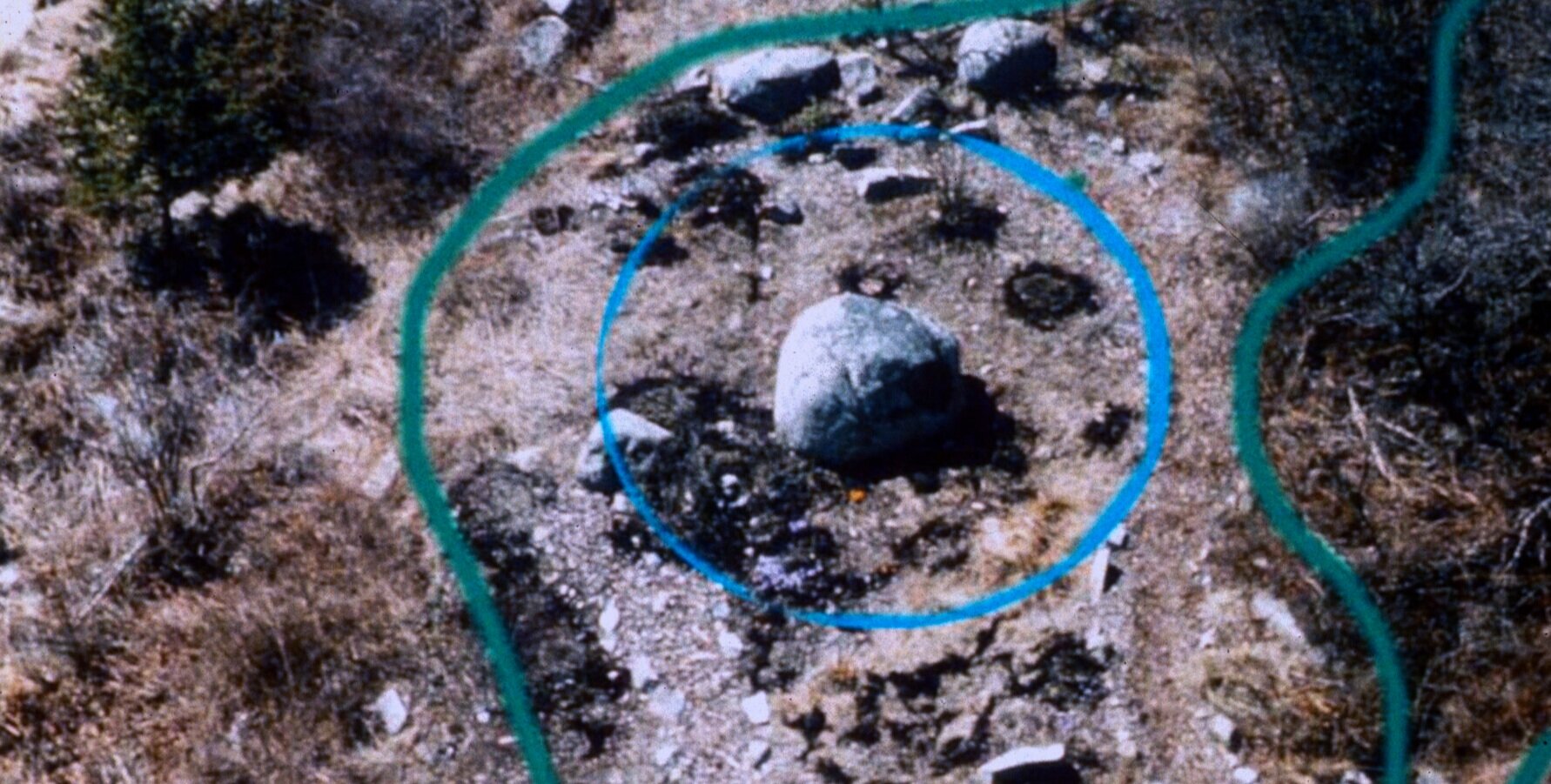
In spite of challenges, from 1990-2000, in the project Ghost Nets, I spent ten years restoring a town dump into a flourishing wetlands system and gardens. The whole time, I felt like I was gardening with broken tools.
I have been carefully following the public dispute between Moreno and Miller over allegations of domestic violence and possible consequences for Miller’s political future. Miller has alleged that the fact that Moreno cooked him dinner afterwards is proof that the abuse never happened.

Endings and Beginnings
The image for today’s essay was part of a series of works I completed after a serious head injury. The injury was so serious that I thought I would never paint again. My solution was to go to Europe, where my thinking as a serious young artist had first developed. My idea was to start in Southern Italy and work myself north to Scotland, following the light.
Memory and Attribution
Today there is no image. I have been struggling with a tech meltdown for months. Somewhere in the world is a photograph taken by Fred Lonidier of me sitting in a tree during Pauline Oliveros’ wedding to Linda Montano in about 1970 but I can’t find it. It is symbolic that it is at least temporarily lost but may still be found.

Making Lines in the Sand
There is a fine line between selfish self-centeredness and what the French call amour propre, appropriate regard for ones own needs and limits.
There is a bright line between deliberately causing pain to oneself and others and ignorance.
In nature, the line between habitats needs to be blurred for egress and ingress.
Tides arrive with nutrients and take away the remains of the day.
What does art have to do with it?
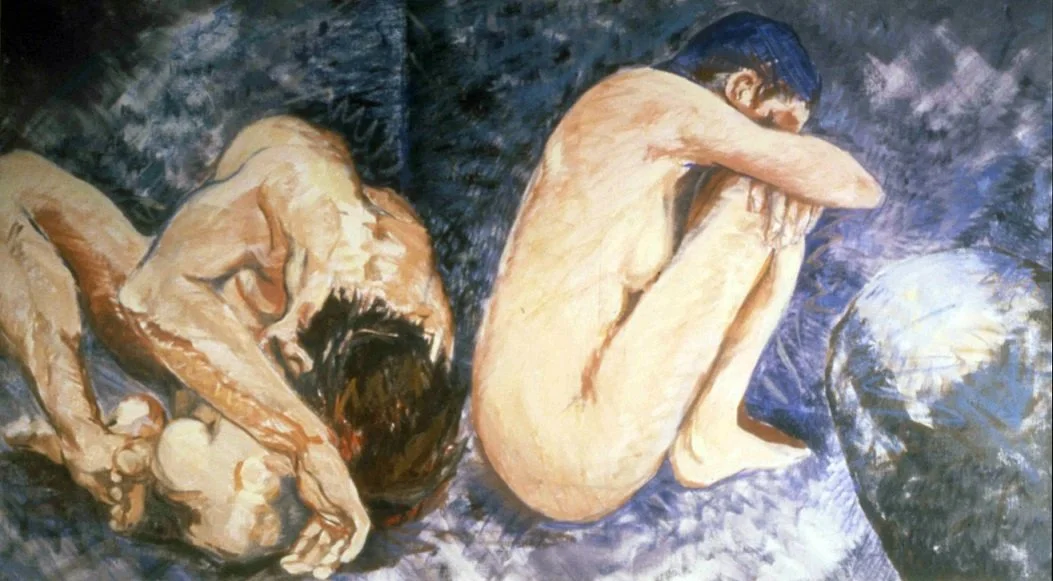
This painting is about the pain of erasure that replaces connection. As I edit this text, Marco Rubio has announced his intention to destroy the International Criminal Court (ICC) at The Hague, and Joan Sebastian Guerrero, an innocent immigrant with legal papers in order, was murdered by ICE agents in front of his three-year old daughter, in Biddeford, Maine, a quiet town not far from where I live. Two more exercises in erasure.
Erasure is a hallmark of a narcissistic system. Narcissism is a static system that depends on erasure unto death. We live in times that require enormous adaptive change. We can’t afford erasures.
Boundaries and Art History
There is a storm coming for the world. It has been coming for a long time. Art history has documented the path.
In my recent month spent in NYC, I attended 3 blockbuster shows of white European male artists: Raphael at the Met, Paul Klee at the Jewish Museum and Marcel Duchamp at MoMA. Each of these artists had a strategy for success our society continues to lionize. Collectively, the three represent a trajectory of how culture reflects itself in a pyramid of success.
Failed States and Trigger Points
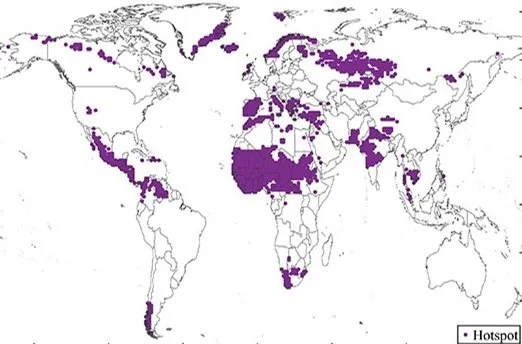
Drought conditions across the globe are accelerating due to extraction technologies and climate change.
I will be in several shows and publications. In one way or another, they all are about ecocide. The causes of drought are the corruption that has led to unfettered climate change, The consequences of drought may be a cascade of failed states, Some people see that cascade as a lucrative opportunity to amass great fortune at great cost to others. That is how a narcissistic system works: destroy the other for selfish gain.
Threading the Needle
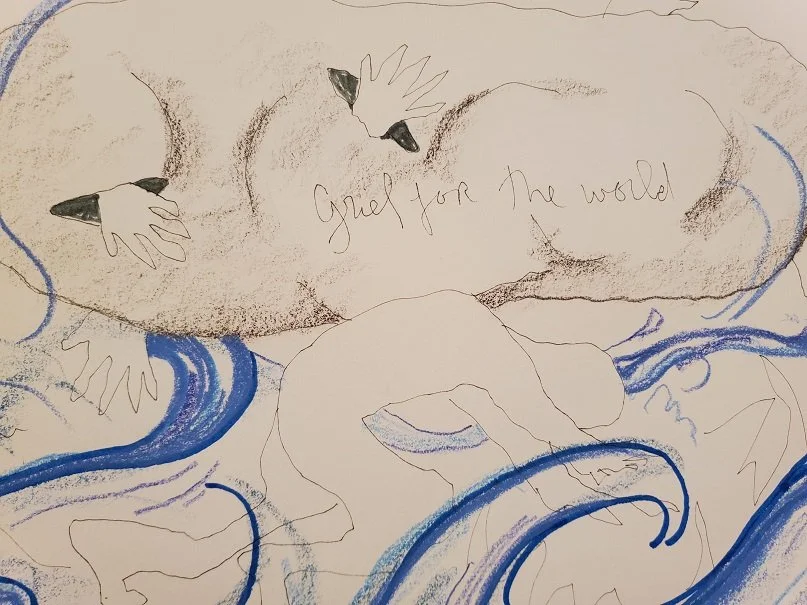
I think we underestimate the cost of living in oppressive circumstances as we age. I don’t just mean the costs of medical care or basic services under an authoritarian regime, but the spiritual labor of trying to go forward in life and stay focused on positivity, clarity and perseverance in the face of obstacles: threading the righteous needle of culture and humanity in the face of violence and cruelty.
Prevailing over Prevalence
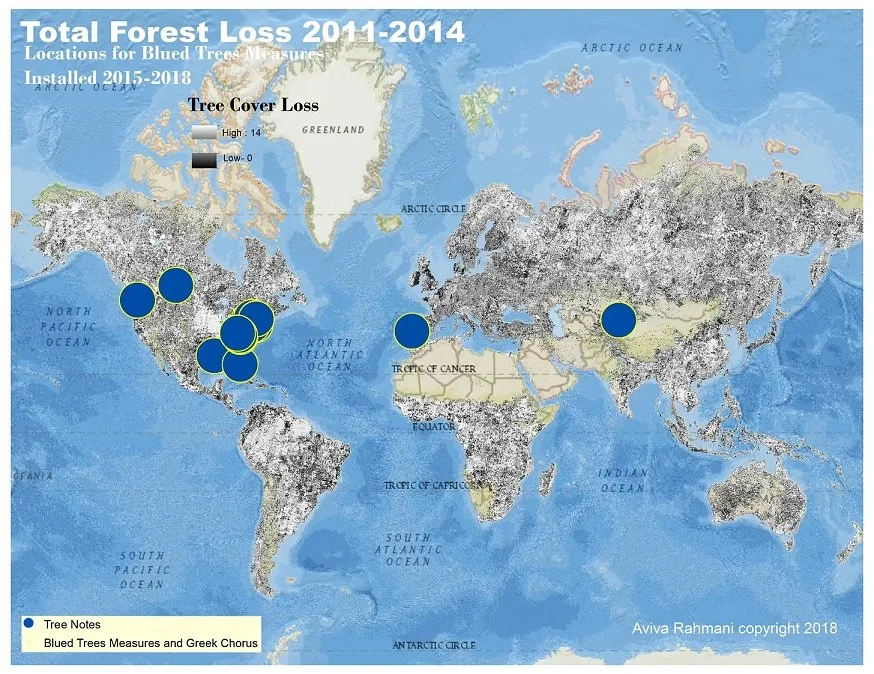
The conclusions from my work on the new project, Tidal Flushing this week at Swale House on Governors island, thanks to the support of ecoartspace, has painted a grim picture of the scale of prevalence of climate change and the authoritarian-fascist dictatorships driving climate change has imposed on the Earth. I confess to periodic despair. But I seize on vision, which may be a form of hope without sentimentality. This residency has revealed a glimmer of light on vision for me.