
Pushing Rocks

Hot Heart, Cold Stare
My parents worked in Venezuela for many years, where they experienced a range of violence at times. One day I dreamt of a painting, which I would call, "Monday Morning." It is the image that accompanies this essay and it was only later that I learned my father had been robbed and I had painted his experience. He was already an old man by then. I am sure his robbers had their own story about what happened that day.

The Shock and Awe of Trauma
Midnight working in my studio in Park Slope, Brooklyn in 1987, I heard screams coming from the street outside my window. I had a glimpse of a man over a woman and a figure rushing to rescue. When I did this painting, it was entirely different than the body I was creating at the time, REQUIEM, which was about my father’s passing and how one goes from grief to happiness.
I have no idea what happened afterwards or even what happened that night. What I know is someone, a woman, yelled for help and someone came to help.
Performance and Anti-performance
In this essay, I will sometimes refer to the current President of the United States as t.
Evgenia Emets of Eternal Forest recently described this series of articles as, "contemplative essays about how art mirrors and inspires life." In this essay, I will consider the current experience of t.’s administration as real life theater..

As A Child
Last night, in a private celebratory event for New Village Press'(NVP)s 20th anniversary, hosted by author Arlene Goldbard and the publisher Lynne Elizabeth, I referenced the term refugia as a place where healing might begin after an ecosystem collapse, ie., after environmental collapse. I wonder when and how, going forward, we will find those places for this country. Surely NVP and other small publishing houses might be a start.

Un-narrativing
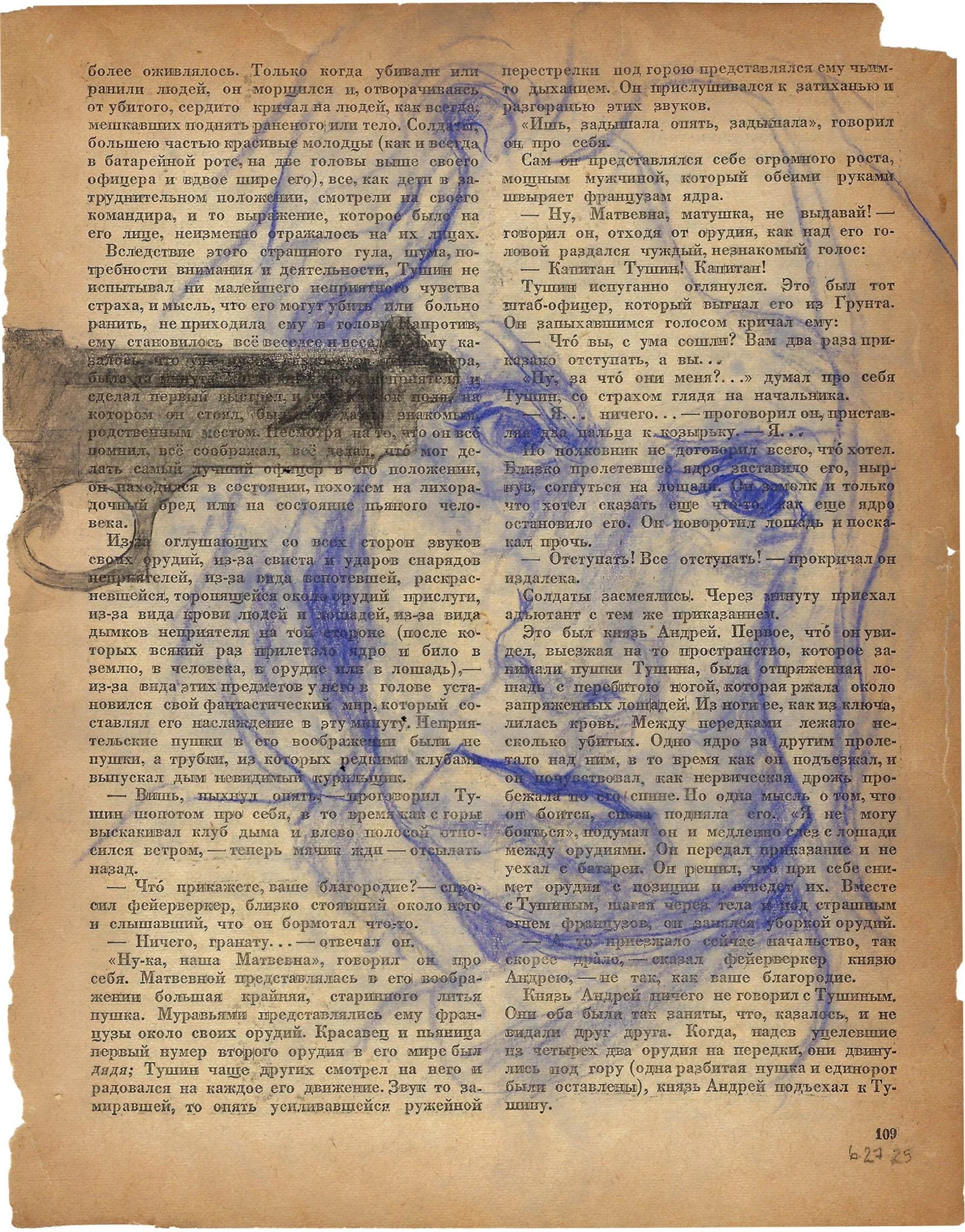
Leo Tolstoy's correspondence with Ghandi is credited with initiating the ideas behind civil disobedience. However, in his personal life, based on my readings of her extensive diaries, it seems he was so emotionally abusive to his wife Sofia, that on more than one occasion, she was driven to suicide attempts. Publicly, Tolstoy based his thinking on Christian theology, including sexual abstinence. Privately, he used that as a pretext to be withholding and judgemental even as he kept having sex with Sofia and getting her pregnant: 16 times.

Ephemerality
Death and grief are inevitable aspects of life. Much art strives for a measure of immortality, if only as a statement about the ephemerality of all life. Now this administration seeks to censor the nations museums and control what is deemed worthy of immortality. Since we know Trump's taste is limited to covering everything in sight with gold leaf, this is not a good prognosis for our cultural future. However, it is a good opportunity to consider what is ephemeral and what death means.
Connecting Dots From the Personal to the Political
In this article I will explore some questions that seem to be emerging in our times, that concern me as an artist. The world seems poised at an historic inflection: what do we deem worthy of protection? Art and artists are as much at the center of that inflection as education, wealth gaps or the destruction of the ecosystems humans depend upon.

Impunity Is A Terrible Thing
In time, human impunity does not stand. That is not the same as justice but history does confer judgements to challenge impunity.
J'accuse
This short essay will argue for a connection between ecocide and femicide, particularly of black and brown women, whose mortality from restricted access to reproductive rights is well-documented. I charge this mortality is a deliberate sexual crime to effect ecocide. Casting a blind eye to that connection is a fatal flaw in civil disobedience as resistance to fascism.